





VIGILANCEIQ (VIQ) FATIGUE RISK FORECASTING
See tomorrow’s tired shift today.
VigilanceIQ forecasts each driver's fatigue risk 12 to 24 hours before the shift. Driver-first readiness for the men and women moving our economy.
Uses the ELD and telematics data you already have. No new hardware.

OUR ECOSYSTEM
SHIFT READOUT
See driver fatigue before the key turns.
VQ-Drive forecasts fatigue risk 12 to 24 hours before a shift starts. Fleet safety teams get a per-driver, per-shift risk score and a clear recommendation, early enough to change the plan instead of reacting to a crash.
Shift readout
Generated 18:00, day before
Driver
#0417 · Regional
Shift start
04:00 · 11 hr drive plan
Sleep, last 72 hr
14.6 hr
Fatigue risk
Elevated
06:30 to 09:00
04:00
09:00
15:00
Recommendation
Move start to 06:00, or schedule a 30 min break before 07:00. Keep this driver off the overnight rotation tomorrow.
Illustrative example. Not real driver data.
TRY IT
Forecast a shift before it starts.
Pick a scenario or enter a driver’s recent sleep and upcoming shift. The demo forecasts alertness hour by hour, flags when it falls toward the circadian nadir, and suggests what a safety team could change.
Illustration only. Not real driver data.
WHY TRUST US
Backed by grant makers, researchers and the trucking industry.
Arch Grants 2026
2026 Arch Grants winner
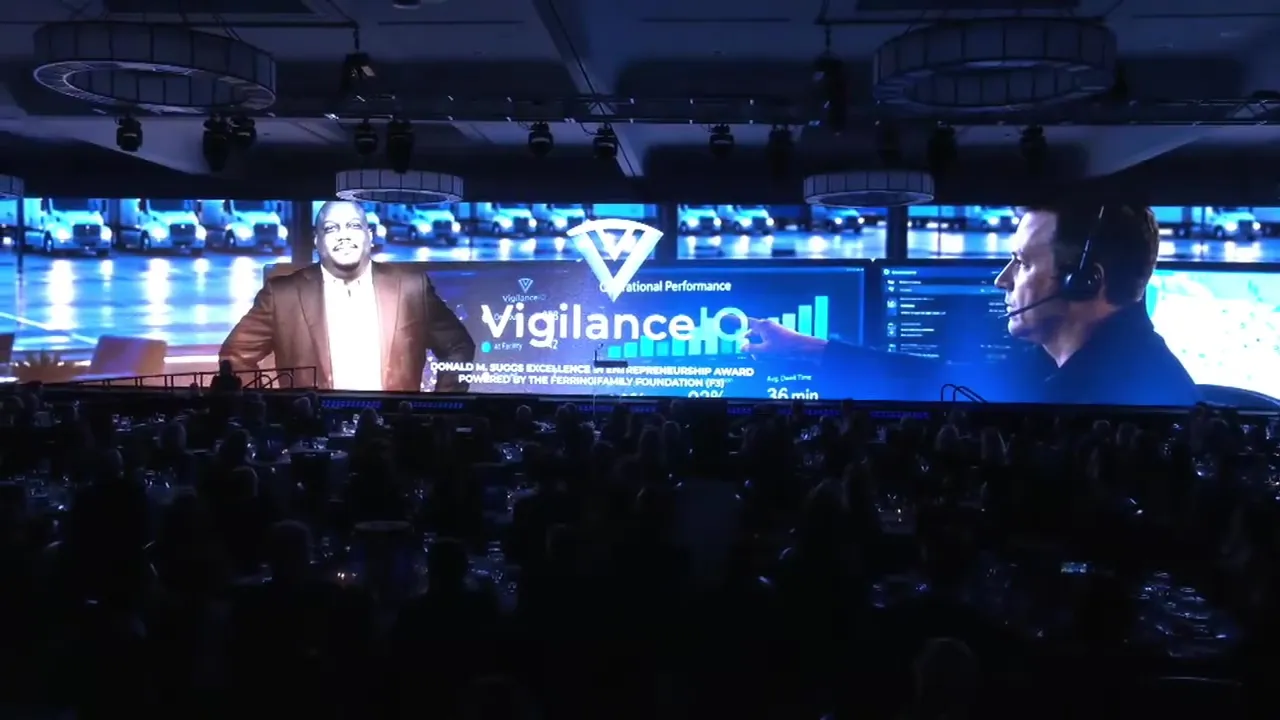
Selected for the 2026 Arch Grants cohort and awarded the Donald M. Suggs Excellence in Entrepreneurship Award.
Research partners
University science
Saint Louis University (SLU) and the University of Missouri-Kansas City (UMKC).
Industry
A seat at the table
Mike Bynum sits on the Missouri Trucking Association Council of Safety Supervisors.
DISPATCH RISK
Catch the high-risk shift at dispatch, not at the crash scene.
The day before
VQ-Drive flags who is at risk tomorrow. Time to change the plan.
Shift start
Logs confirm hours are legal. Compliant, not necessarily rested.
Behind the wheel
In-cab cameras catch drowsy eyes. Risk is already on the road.
Act while you still have options: shift a start time, swap a route, adjust a duty roster.
HOURS OF SERVICE
Hours of service tells you how long a driver can legally drive. It can’t tell you how rested they are.
Two drivers can log the same hours and show up in very different shape. Most fatigue tools today react in the cab, after alertness has already dropped. By then the only option is to pull over.
VQ-Drive moves the decision upstream, to dispatch and scheduling, where a safety director can still swap a load, shift a start time, or plan a break.
Looks back
Hours of service logs
Show whether the hours were legal. They do not show how rested the driver is.
After the drive starts
Reactive tools
Detect drowsiness during the drive, usually with in-cab hardware. Useful, but late.

Before the shift starts
VQ-Drive
Forecasts fatigue risk 12 to 24 hours ahead, for each driver and each shift, so the plan changes before the truck rolls.
THE STAKES
Fatigue is a balance-sheet event.
The one cause of truck crashes you can see coming, if you are looking. Hours-of-service logs track time on duty, not whether a driver is rested.
13%
of large trucks in serious crashes had driver fatigue as an associated factor.
FMCSA Large Truck Crash Causation Study (civilian data)
8%
of tactical vehicle accidents in a major U.S. military service, FY2010 to 2019, had fatigue or lack of rest as a cause.
GAO-24-105917
THE PLATFORM
One score. Every shift. Every system you already run.
Step 1
Connect your data
Shift schedules, ELD hours of service and optional sleep data from wearables flow in through our API.
Step 2
Forecast the risk
Our science-based model scores each operator’s fatigue risk 12 to 24 hours ahead, and is individualized to each person over time.
Step 3
Act before the shift
Dispatchers and commanders see who is at risk and adjust start times, routes or assignments before anyone is behind the wheel or on mission.
FOR DRIVERS
One 5 minute check. A better shift.
Before you drive
One 5 minute check
A 5 minute alertness check before each shift. Streaks reward the habit, not the result.
Sleep data
Wearable or manual
Sleep comes from your wearable or a quick manual entry. No new hardware required.
Your shift
Know your windows
See your best and worst alertness windows for the shift ahead, and get an alert before severe fatigue sets in.
OUR APPROACH
Readiness isn't a slogan. It's a model.
Built by a veteran on decades of peer-reviewed sleep and performance research, and tested with university research partners. The model starts from the science and adapts to each operator over time. Science in, decisions out.
Illustrative.
Individual, not average
The forecast is individualized to each operator.
Sensor-agnostic
Works with the schedule data you already have. Wearables are optional.
Honest about limits
It forecasts fatigue risk, not crashes.
FOUNDING PARTNER PILOT
90 days. Your drivers, your shifts.
Week 1
Connect
We connect to your ELD and scheduling data for 5 to 10 drivers. No new hardware needed to start.
Days 1 to 90
Forecast
Each driver gets a forecast of fatigue windows against their real shifts, with rest recommendations or an alert before severe fatigue sets in.
Day 90
Review
We review results with your team and hand you a documented fatigue process you can share with your insurer. Three Founding Partner seats.
WHO IT’S FOR
Built for the people moving the economy.
Commercial Fleets
For safety directors at medium and large fleets. See each driver’s fatigue risk before dispatch, and act before the key turns.
Explore fleets

Aerospace & Defense
For commanders and planners. Built to forecast fatigue risk up to 24 hours before the mission, so leaders have time to adjust.
Explore defense
Frequently asked questions
How is this different from an in-cab camera?
Cameras respond once fatigue shows on the road. VigilanceIQ forecasts each driver's fatigue risk 12 to 24 hours before the shift, so dispatch can adjust the plan first. The two work together.
Do drivers need to wear anything?
No. The forecast uses schedule and ELD hours of service data. Sleep data from a wearable is optional.
Does it replace hours of service compliance?
No. Hours of service rules limit time on duty. The forecast adds a view of how much fatigue risk each driver is likely to carry into the shift.
Does it forecast crashes?
No. It forecasts fatigue risk, not crashes.
What does the Founding Partner Pilot involve?
A 90-day pilot with a small group of your drivers. We connect to your schedule and ELD hours of service data, read-only, and your dispatch team receives daily risk flags. See the Founding Partner Pilot section above for the phases.
Who is VigilanceIQ built for?
U.S. trucking fleets and Department of War (DOW) teams who want to forecast fatigue risk before the shift or mission.