How Fleet Insurance Policies Drive Fatigue Forecasting Technology
Mike Bynum
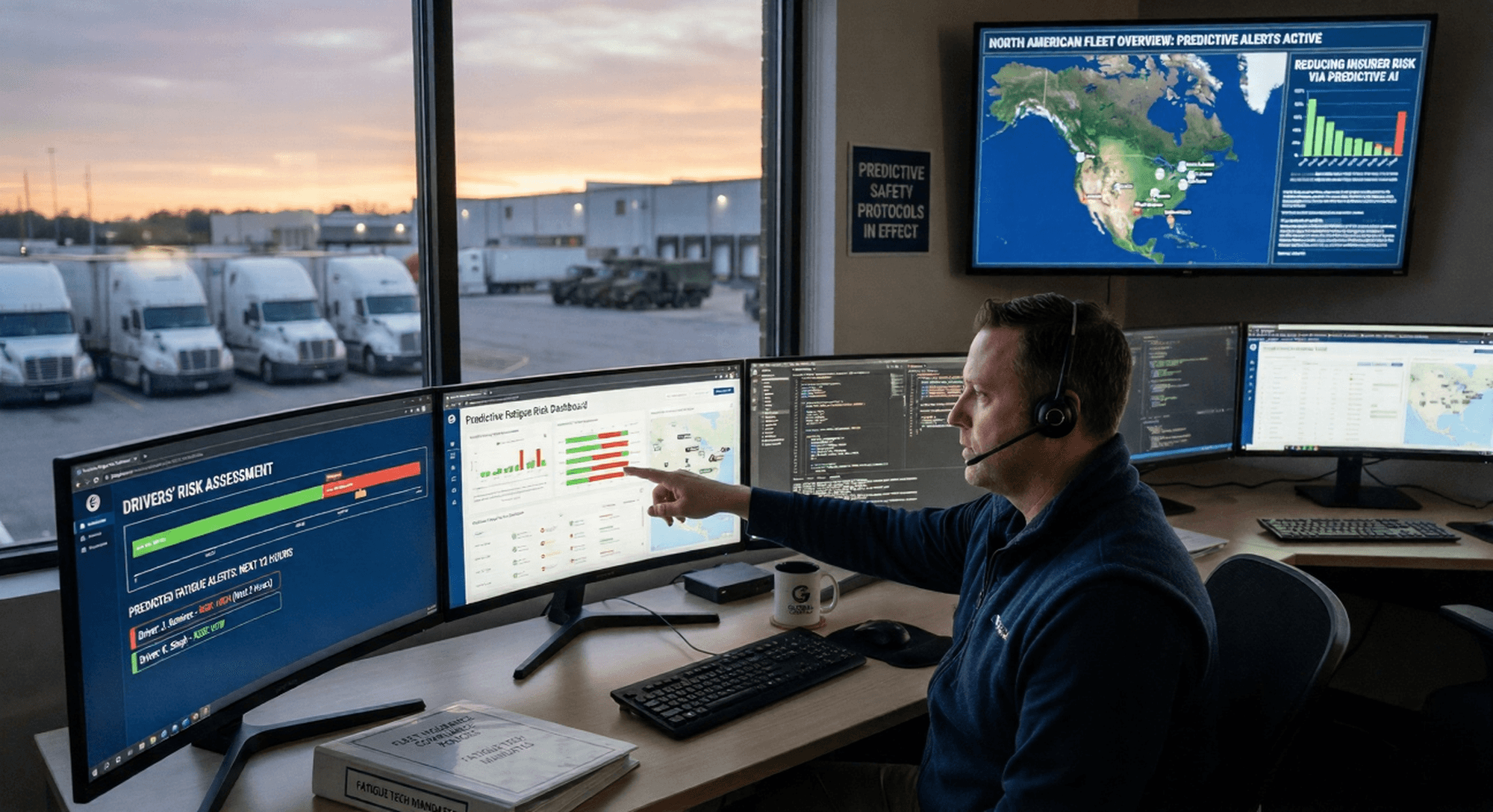
The logistics and defense industries face a big challenge right now. Insurance costs are going up. Accidents caused by tired drivers are a main reason. For years, companies used electronic logs to track hours. They thought following the rules was enough to stay safe and keep insurance cheap.
But that is no longer true.
Insurance costs for trucking keep climbing, and underwriters are looking harder at safety programs. Many are asking harder questions about how fleets manage fatigue. Reactive data alone no longer tells the whole story. This is changing how fleets manage driver fatigue.
The shift to fatigue forecasting
Old systems only tell you when a driver is already tired. They use cameras to watch for heavy eyelids. That is too late. The danger is already there.
Fatigue forecasting technology is different. It uses artificial intelligence. The software looks at past sleep data, shift schedules, and biological models. It forecasts when a driver's alertness will dip. It does this hours before the shift even starts.
This gives dispatchers a chance to act. They can delay a start time or swap a route. They fix the problem before the driver gets behind the wheel.
Why insurance companies care
Insurance companies lose money when trucks crash. They know that tired drivers cause many crashes. They also know that strict hours of service rules do not stop all fatigue. A driver can follow all the rules and still be too tired to drive safely.
That puts pressure on fleets to show more than compliance. A fleet that can document how it finds and manages fatigue risk has a stronger story to tell its insurer.
What this means for logistics and defense
Logistics companies have to adapt. Defense contractors that move heavy equipment have to adapt too. Buying the software is the first step. But it is not the only step.
Companies should pair the forecast with a clear policy: who reviews a high-risk flag, what options they have, and how the decision is recorded. A documented, consistent process is what insurers and auditors want to see.
Managers need clear training. They need to know how to read the risk scores. They need the authority to pull a driver off a route.
A better way to work
This change is hard for some companies. It costs money to set up new systems. It takes time to train staff.
But it is a better way to operate. It saves money in the long run by helping fleets catch high-risk shifts before the truck rolls. More importantly, it saves lives. It treats drivers like humans who need proper rest.
I expect this trend to grow. Fatigue forecasting will become a standard requirement. If you manage a fleet, you need to prepare for this shift now. Talk to your insurance provider. Look at the AI tools on the market. Update your safety policies before you are forced to do it.