·
3 Minutes
How Fleet Insurance Policies Drive Predictive Fatigue Technology

Mike Bynum
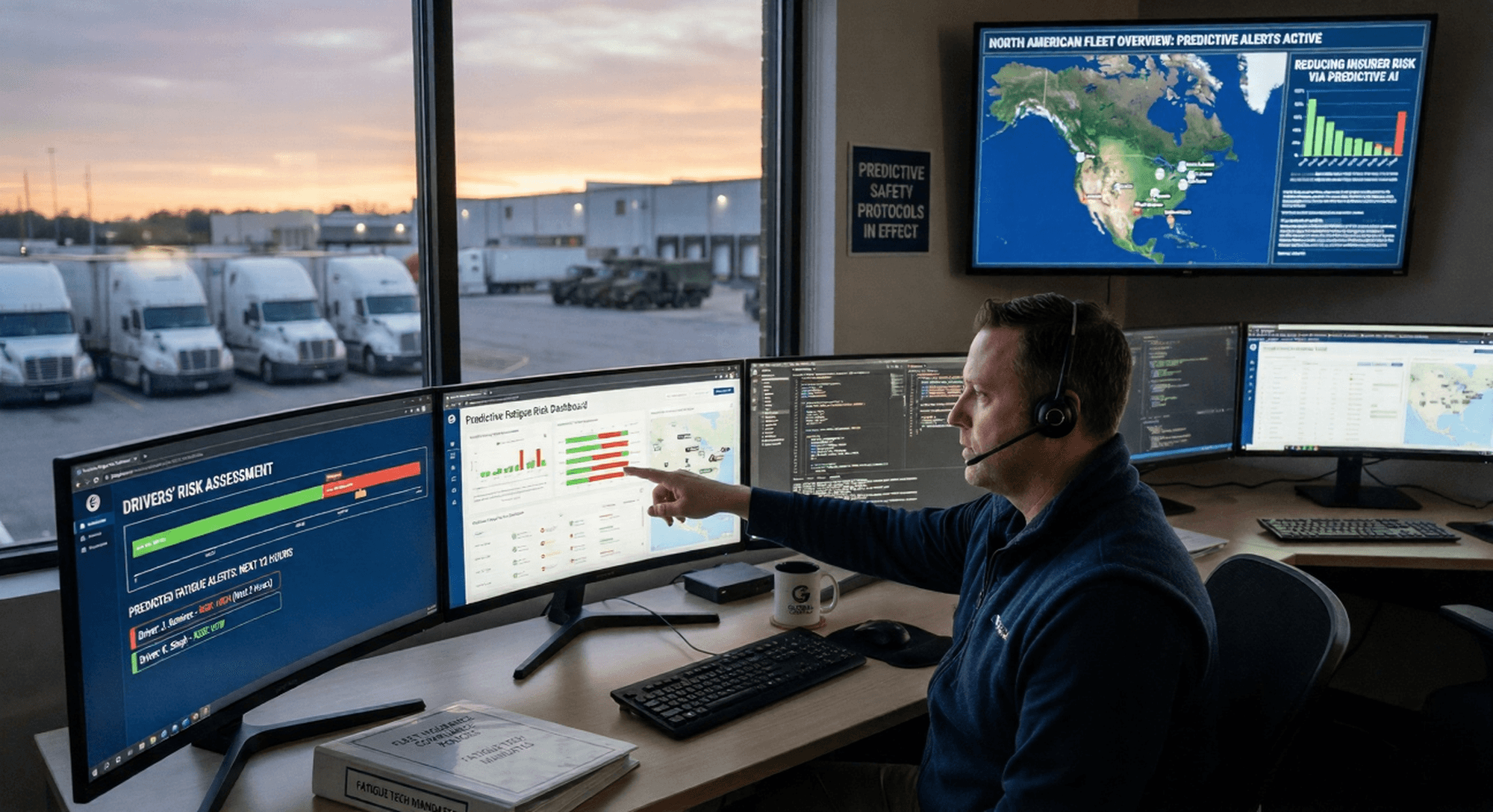
The logistics and defense industries face a big challenge right now. Insurance costs are going up. Accidents caused by tired drivers are a main reason. For years, companies used electronic logs to track hours. They thought following the rules was enough to stay safe and keep insurance cheap.
But that is no longer true.
Insurance companies are changing their policies. They have new demands for 2026. They do not want reactive data anymore. They want predictive data. This is changing how fleets manage driver fatigue.
The shift to predictive AI
Old systems only tell you when a driver is already tired. They use cameras to watch for heavy eyelids. That is too late. The danger is already there.
Predictive fatigue technology is different. It uses artificial intelligence. The software looks at past sleep data, shift schedules, and biological models. It predicts when a driver will get tired. It does this hours before the shift even starts.
This gives dispatchers a chance to act. They can delay a start time or swap a route. They fix the problem before the driver gets behind the wheel.
Why insurance companies care
Insurance companies lose money when trucks crash. They know that tired drivers cause many crashes. They also know that strict hours of service rules do not stop all fatigue. A driver can follow all the rules and still be too tired to drive safely.
So insurers are pushing for better tools. Many will not offer good rates unless a fleet uses predictive AI. Some might refuse to insure a fleet at all. They want proof that the company is actively stopping accidents.
What this means for logistics and defense
Logistics companies have to adapt. Defense contractors that move heavy equipment have to adapt too. Buying the software is the first step. But it is not the only step.
Companies must change their internal policies. If the AI flags a driver as a high risk, the company must have a rule on what to do next. You cannot ignore the warning. If you ignore it and a crash happens, the legal trouble is severe. The data will show that you knew the risk and did nothing.
Managers need clear training. They need to know how to read the risk scores. They need the authority to pull a driver off a route.
A better way to work
This change is hard for some companies. It costs money to set up new systems. It takes time to train staff.
But it is a better way to operate. It saves money in the long run by preventing crashes. More importantly, it saves lives. It treats drivers like humans who need proper rest.
i think this trend will only grow. Predictive technology will become a standard requirement. If you manage a fleet, you need to prepare for this shift now. Talk to your insurance provider. Look at the AI tools on the market. Update your safety policies before you are forced to do it.